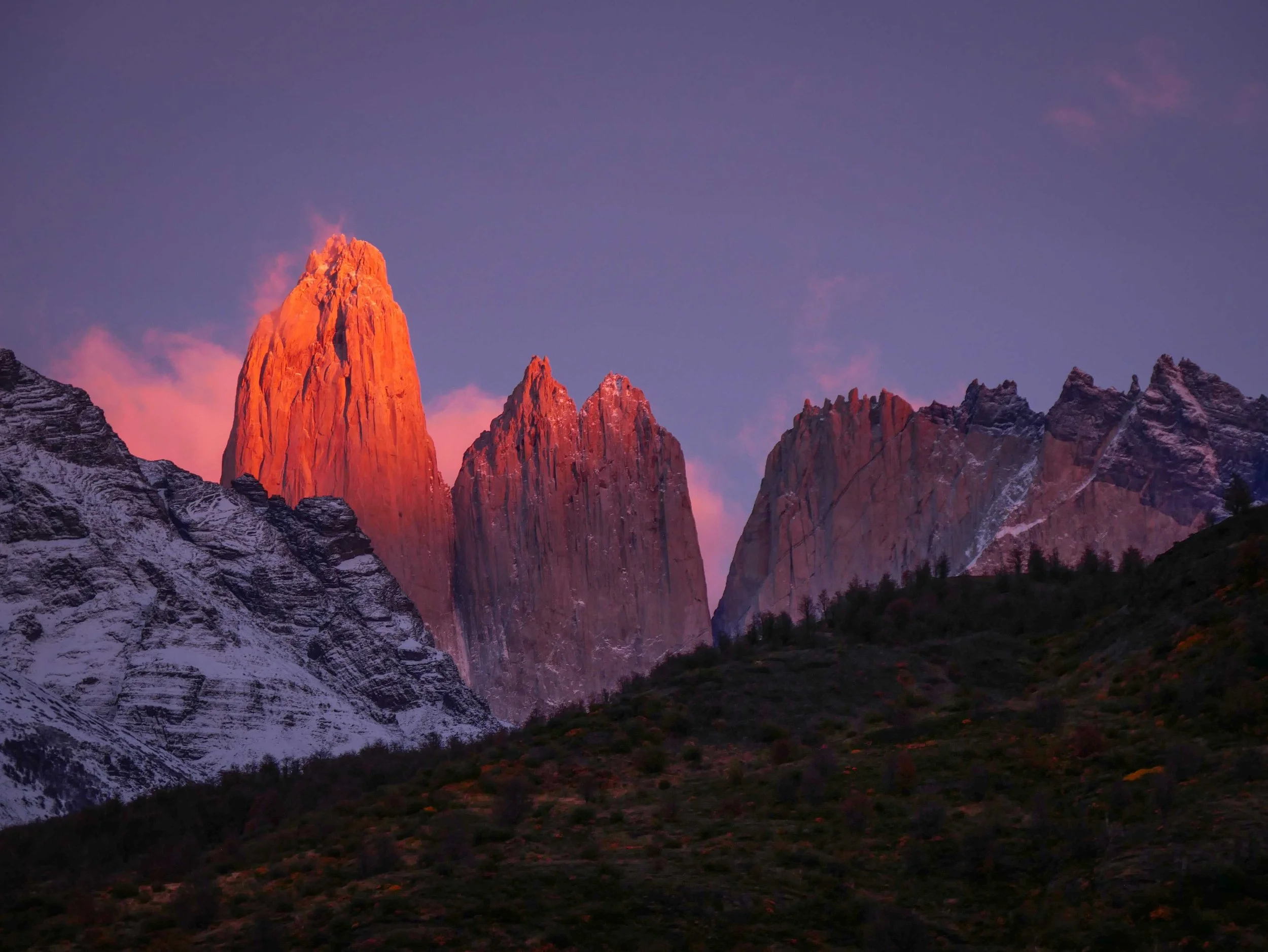
Patagonia, chilesouth americamay 2025Torres del Paine
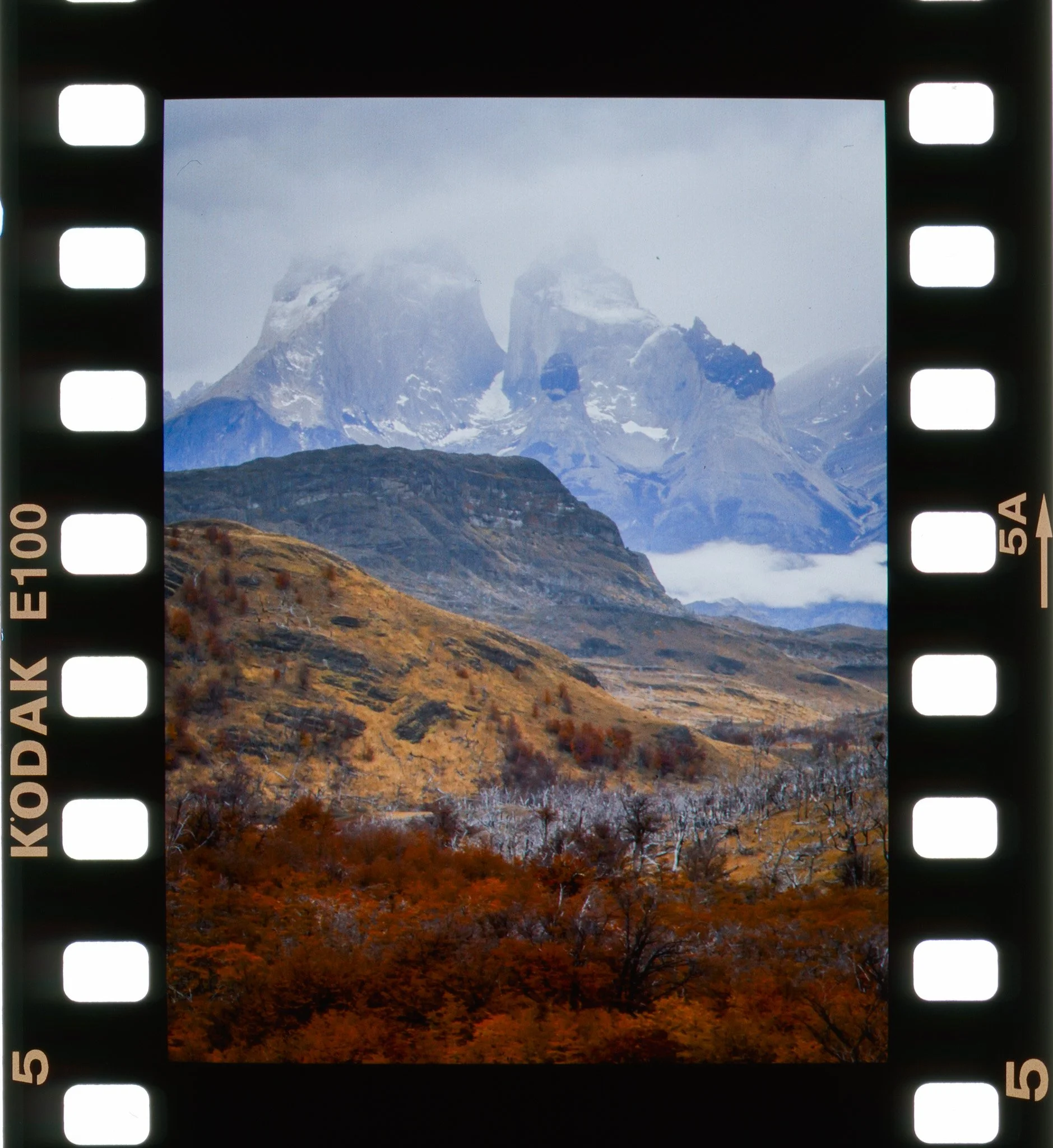
Los Cuernos
Journeying to the 'End of the World' (Fin del Mundo) and Patagonia, I could only think of Butch Cassidy and the Sundance Kid running from the law and hiding out here - the real gangsters, not the Hollywood characters. Back at the turn of the other century, they were robbing banks in Argentina and crossing the border into Chilean Patagonia, where I was headed. Their lives ended in South America if the whole story is to be believed - maybe I’ll see their ghosts along the way.
I read Bruce Chatwin’s classic book In Patagonia in the late 70s and this only added more mystery to the region. It was a place people went to disappear. There’s the Mylodon Cave Natural Monument just 24 kilometres north of Puerto Natales, that was made a national monument in 1993. But human existence dates back to 6000 BC here, well before Chatwin’s ancestors liberated a piece of sloth hide from the cave that started him on his curious journey.
After losing my debit card in an ATM machine at the Santiago airport en route and more than 24 hours of travel no matter what part of the globe you journey from, I finally touched down in the sleepy southern frontier town of Puerto Natales, Chile. Commercial flights were only re-established again in 2017. Everything felt like a work in progress here. Two days later a 7.4 earthquake rocked the Drake Passage and Strait of Magellan and evacuated 500 people up to higher ground with a tsunami warning. I quietly saw two dozen in total the day I visited, so where they found 500 people to evacuate is a mystery to me? By the time of the quake, I was 125 km north and safely on higher ground in the nearby national park. Without cell service to let anyone know, family and friends feared the worst. Some of Butch Cassidy's ghosts were already chasing me.
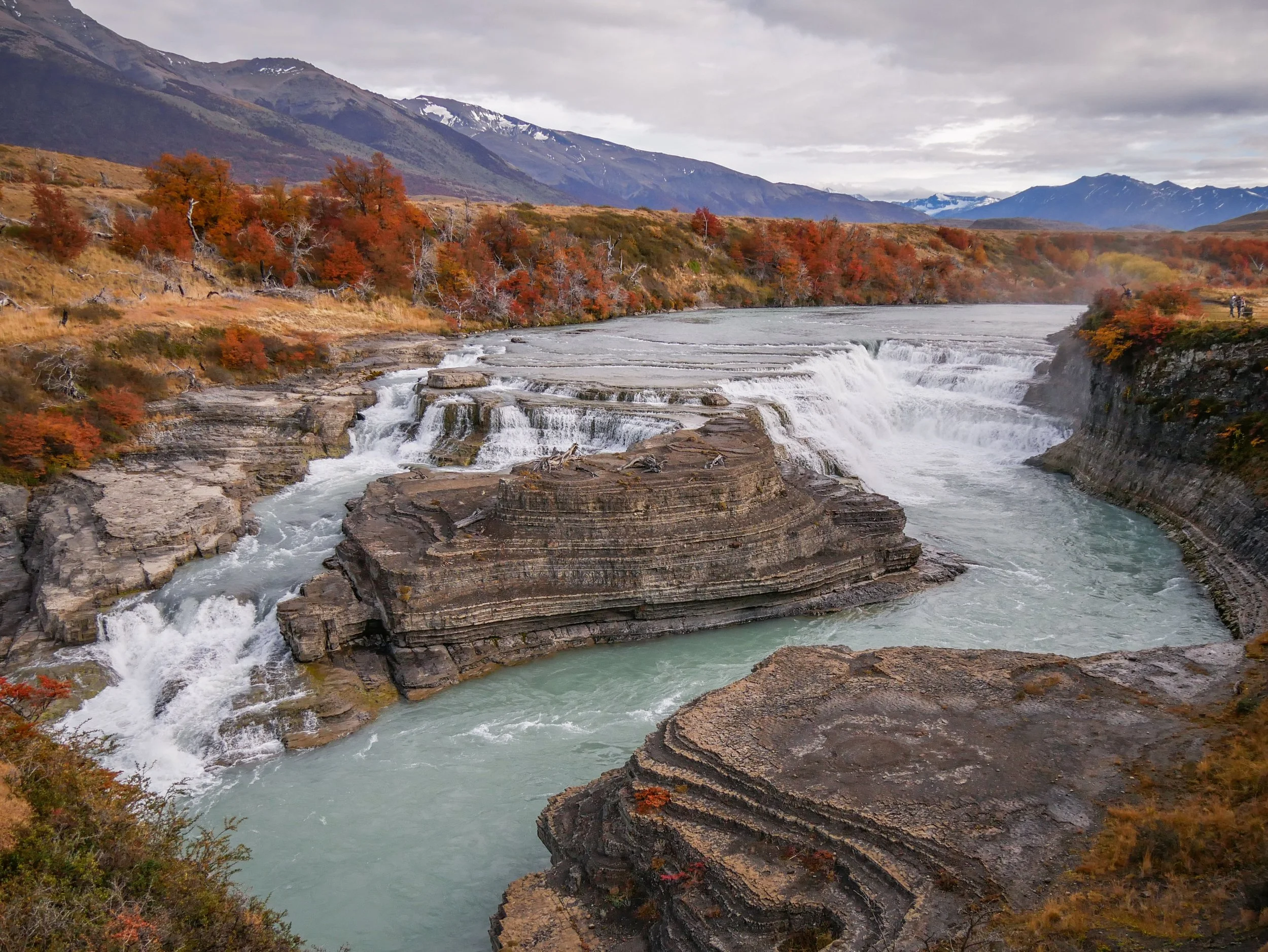
Cascada Paine
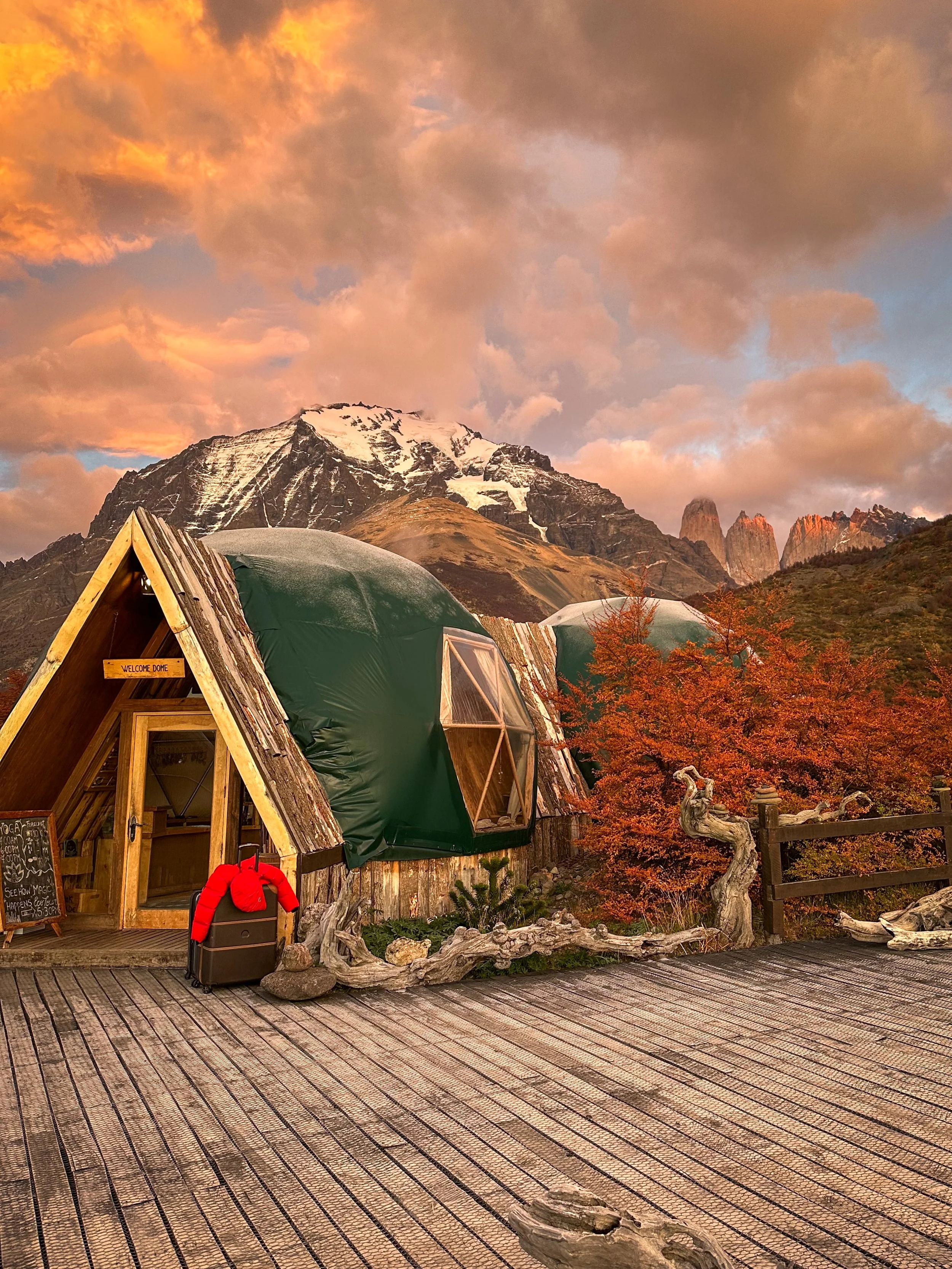
Being opposite seasons with frost now in the mornings in May and too late in the Patagonian Fall to book the W trek huts or refugios in Torres del Paine, I elected to stay inside the national park at EcoCamp. They are the first fully sustainable dome hotel that’s totally off the grid, acknowledging the local Indigenous Kawésqar people and their traditional dwelling designs. Utilizing solar panels and micro-hydro turbines that draw water from a nearby river, EcoCamp uses renewable resources to power much of their limited electrical needs. Composting and recycling everything, they've been carbon neutral since 2007. It was a fantastic way to reduce my carbon footprint while travelling. What started as a desire to hike the well worn path, was sidetracked by the far more rewarding path less travelled.
Torres del Paine (‘towers of blue’) was formally established as a national park in 1959. Then in 1977, Guido Monzino donated 12,000 adjoining hectares, creating a total of almost 182,000 hectares. The park was designated a world biosphere reserve by UNESCO later in 1978 and is one of the largest and most cherished parks in Chile. Over 250,000 visit the park annually and those numbers are growing exponentially each year (update: CONAF reports 367,000 visited in 2024). Park officials report that 1500 people have been known to hike the trail to the base of the 3 towers on some of the busier summer days.
But off season, the utter silence in Patagonia wraps around you, eerily almost deafening. The quality of air, the angle of the light this time of year, the wind across the steppe was otherworldly. And with the mountains and glaciers this close to sea level, the colder moist katabatic winds drawing down stood in contrast to the relative warmth of the sun rising off the land. Standing there on my first day it was impossible to describe, but I realized I was somewhere uniquely different - there is no other place on earth like Patagonia.
Hiking out to the Indigenous cave paintings on the Aonikenk Trail (Hunter Trail) or on the La Loma Trail near Laguna Azul, these quieter trails and their absolute solitude allowed for wonderful wildlife viewing. I hadn’t seen a hydro line or airplane in days, let alone cross paths with any other hikers.
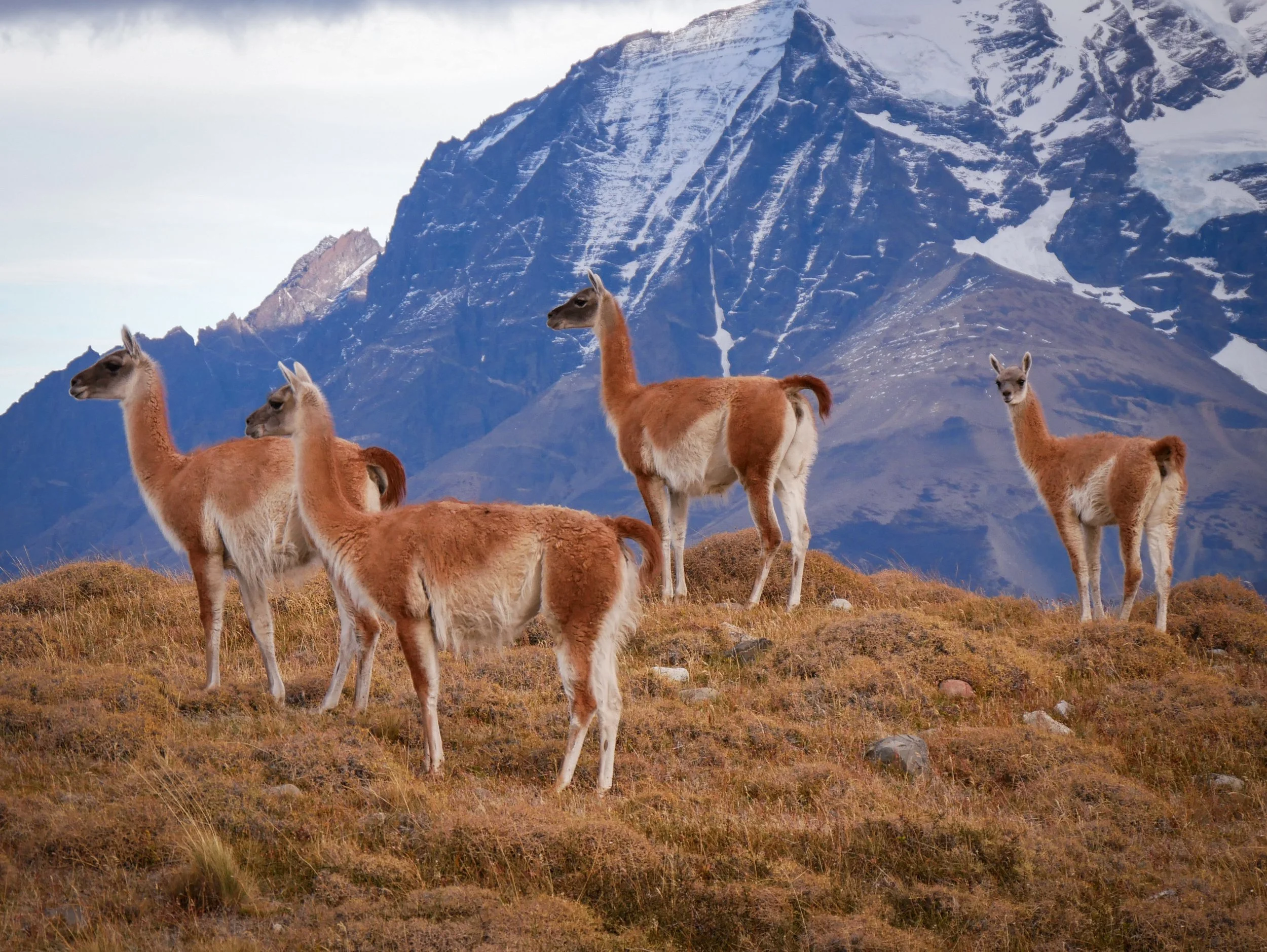
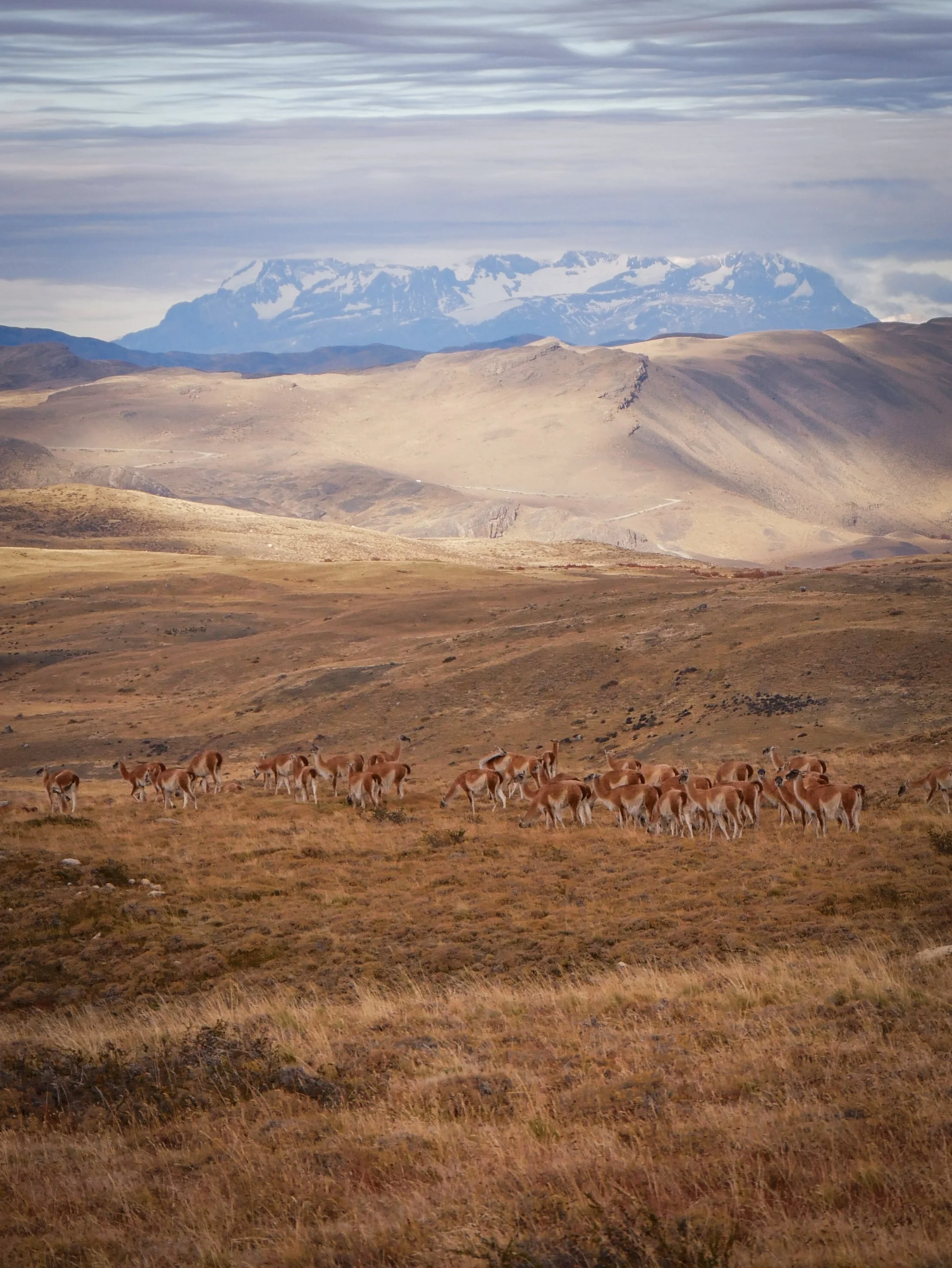
Herds of guanaco, a native camelid to South America, could be spotted across the steppes and grasslands on our various hikes. Llama and alpaca are distant cousins that have been domesticated for thousands of years, but not so with the wild guanaco and their baby chulengos.
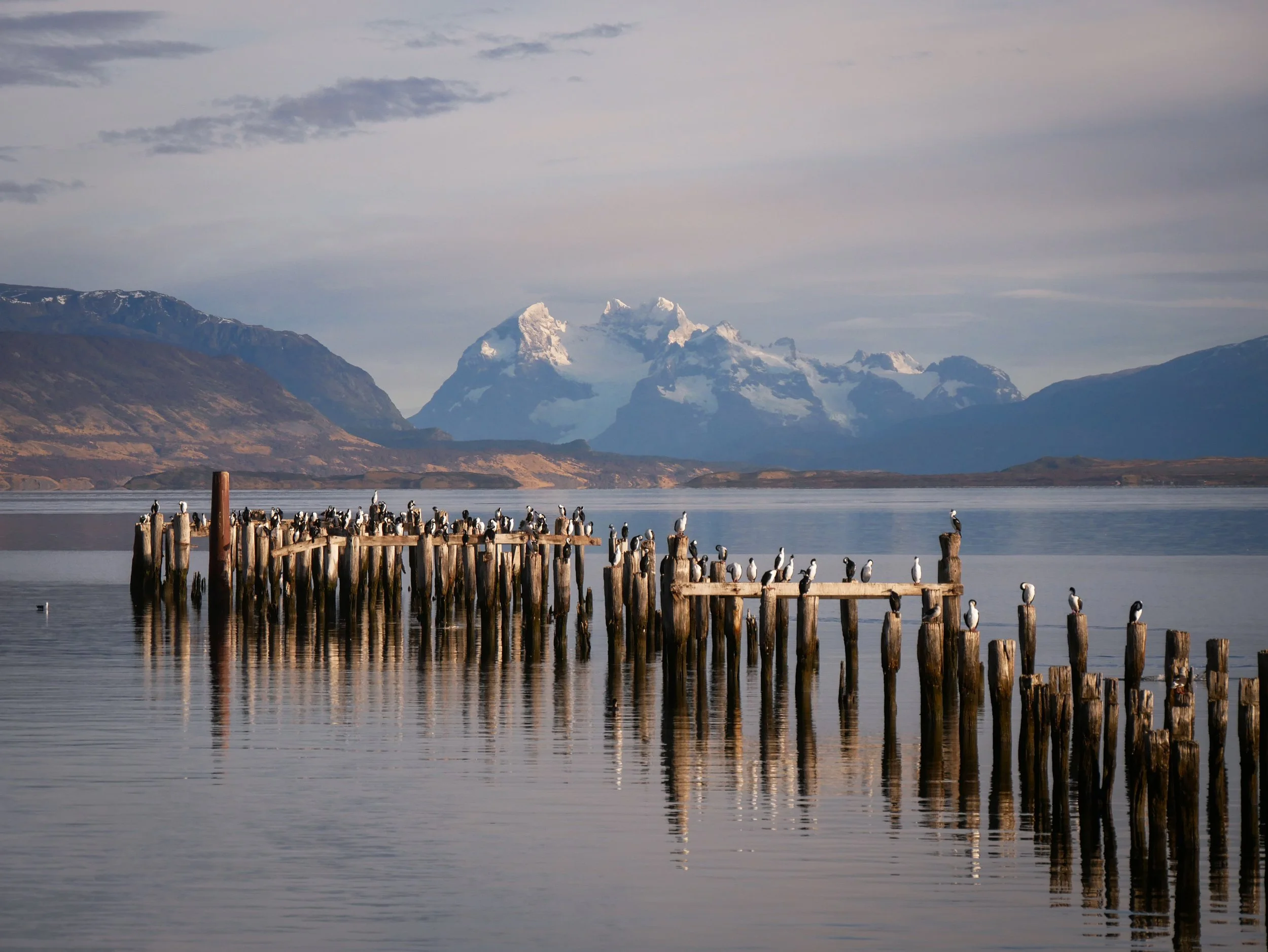
Puerto Natales
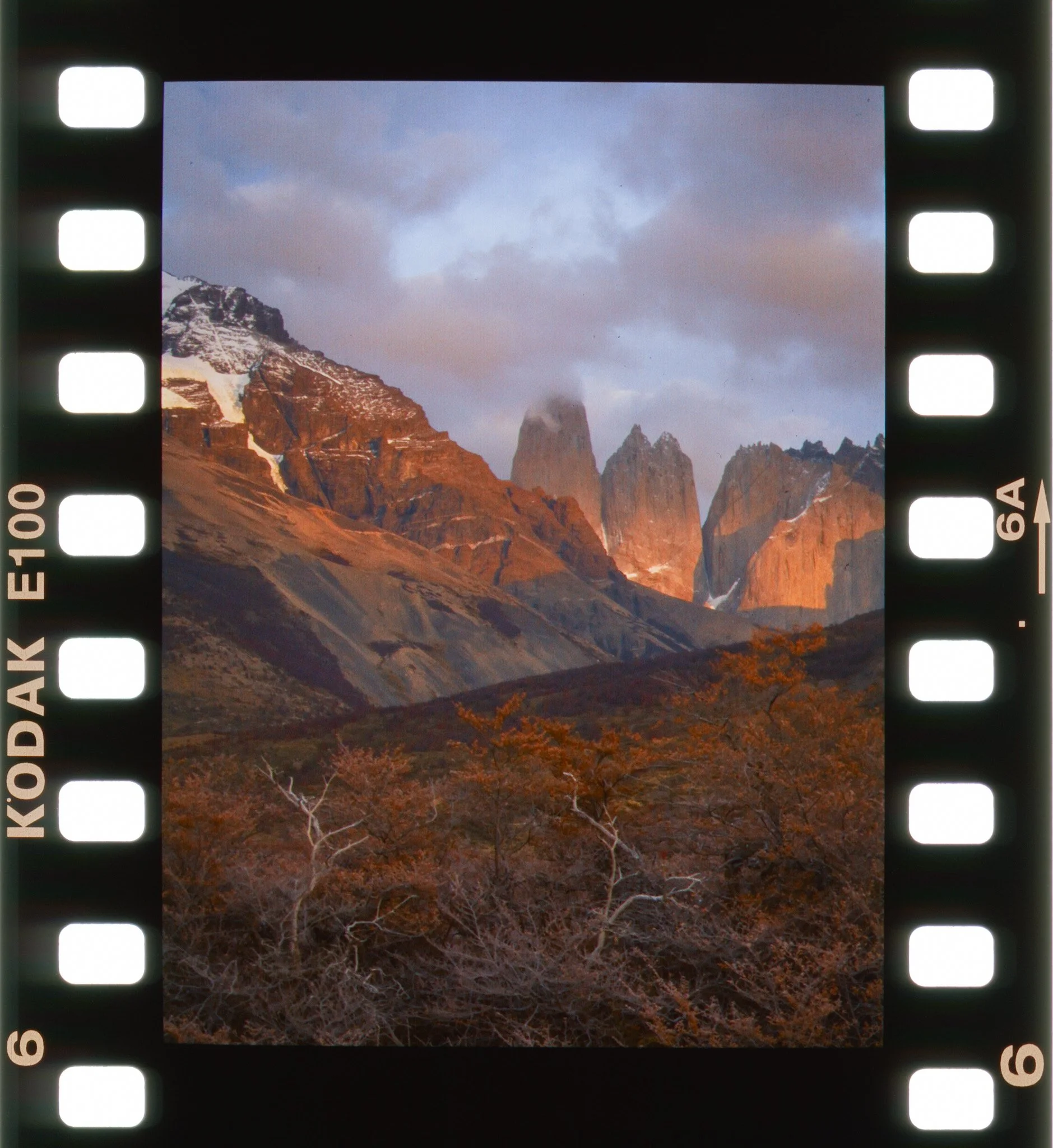
Starting to explore the park, I tackled the Lazo Weber Trail from Laguna Verde, with spectacular views of Los Cuernos (the horns). Grazing on local Calafate berries, you pass through traces of a Magellanic subpolar forest, after catastrophic fires ripped through and devasted the area in 2005 and again in 2011. The bones of these trees make for dramatic images. Layers of colours are visible through shrouded cloud with the darker sedimentary rock caps against the lighter granite of Los Cuernos in the background, transitioning through to the Fall colours of the forest in the foreground.
Another day I hiked out to the Aonikenk petroglyphs. Over 6500 years old, these paintings tell a story as old as man. The outstretched hand relaying a message to stop here for food/water, or maybe of the danger of nearby puma. Today, this culturally important trail officially requires a guide because of this and the puma activity in the area. There are numerous petroglyphs throughout Patagonia, one site in Argentina known as the Cave of the Hands (Cueva de Las Manos) has over 800 handprints. I’m happy to see the small collection of ancient paintings knowing the importance to the Tehuelche people here in Eastern Patagonia – yet more ghosts following me.
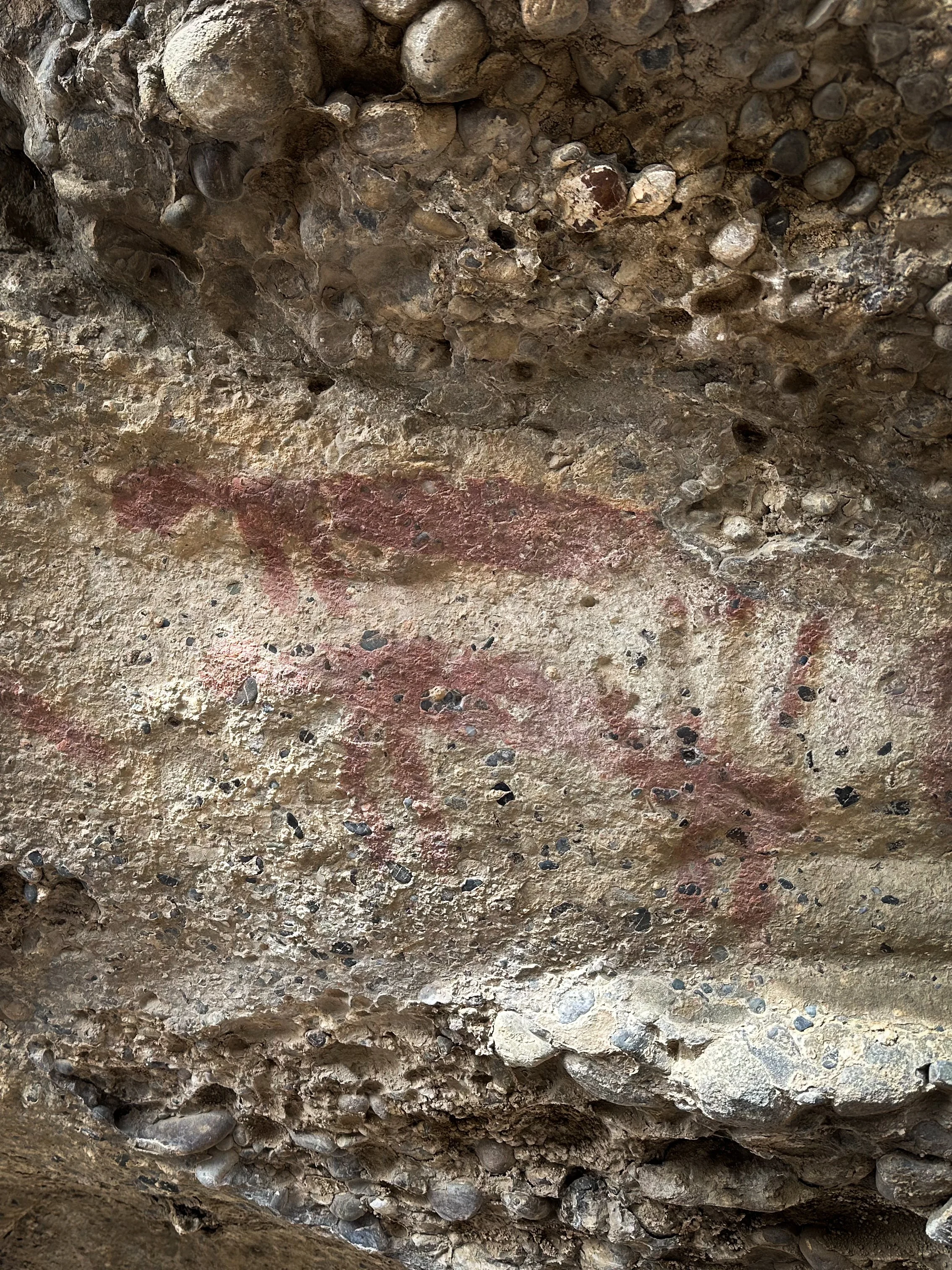
Always on the lookout, every trail I hiked had puma droppings and scat, guanaco carcass, scattered bones. Top of the food chain, puma are the apex predator in Patagonia. Known as mountain lion in the United States, cougar in Canada and puma in Patagonia, they’re the same species with only cultural and regional subspecies. These cats have the widest distribution of any New World mammal in the Western hemisphere.
Just how important puma are to their environment is being studied by organizations such as Panthera and institutions as University of California, Davis in the United States. A Magellanic puma would not normally eat an entire guanaco in one kill compared to how a North American bear might with a deer, creating a unique carcass of leftovers. Each kill brings new life, especially in Patagonia. Here they contribute more than three times as much carrion to local ecosystems as wolves do in Yellowstone National Park, USA. Considered ecosystem engineers, scientists have realized these cats have interrelationships with nearly 500 living species and help initiate a chain of ecological processes that are fundamentally key to their environmental ecosystems. Puma are so interconnected with such a wide range of other animals and even plants, that tenuous Andean condor populations would not survive without the contribution of Puma concolor and there’s even evidence puma help transmit seeds for various plant communities, allowing guanaco (their main food source) and other animals to continue to graze in these dry habitats. And there’s the important historical considerations with the cultural and spiritual values puma provide as I witnessed with the petroglyphs on the Aonikenk Trail.
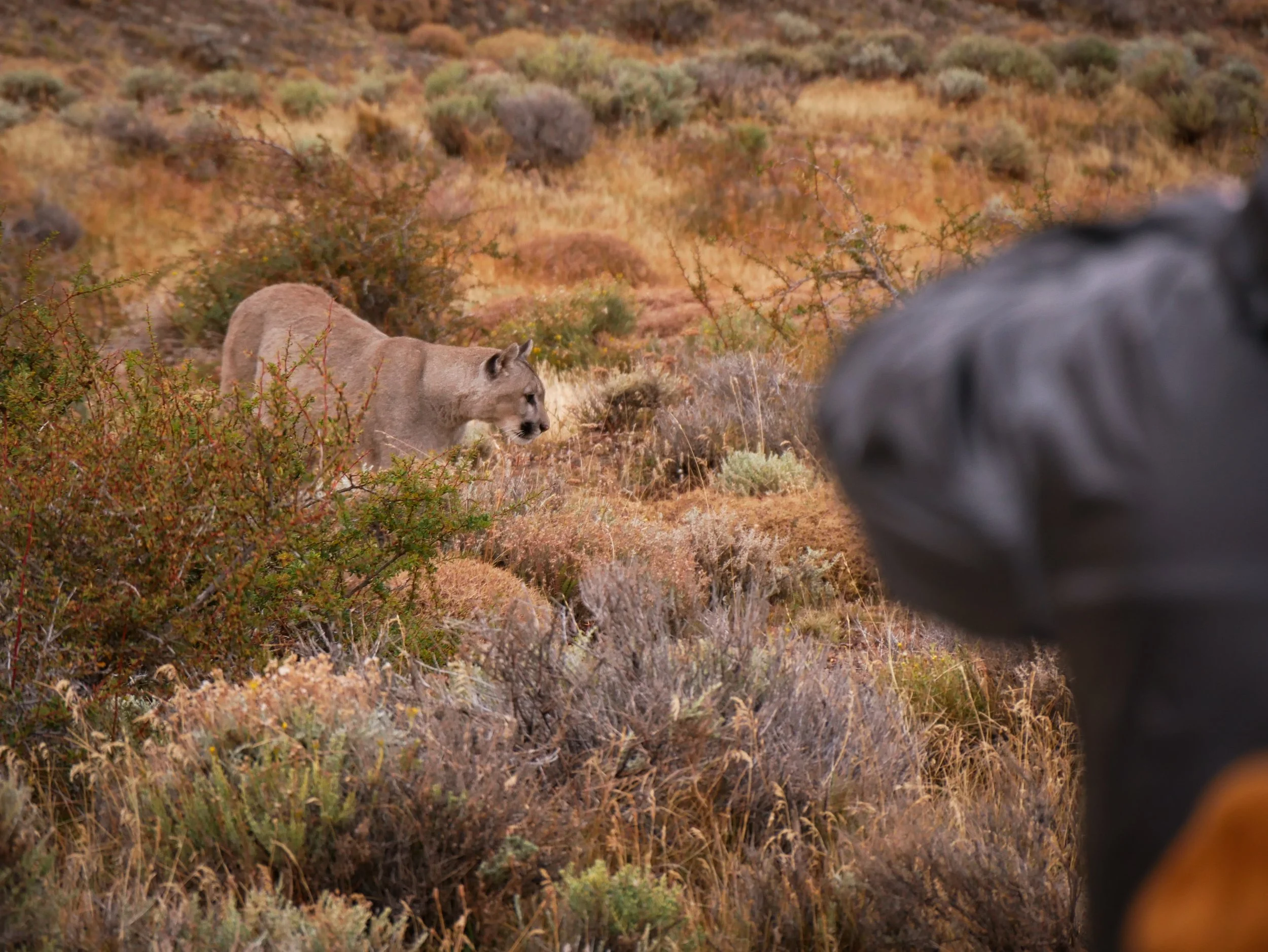
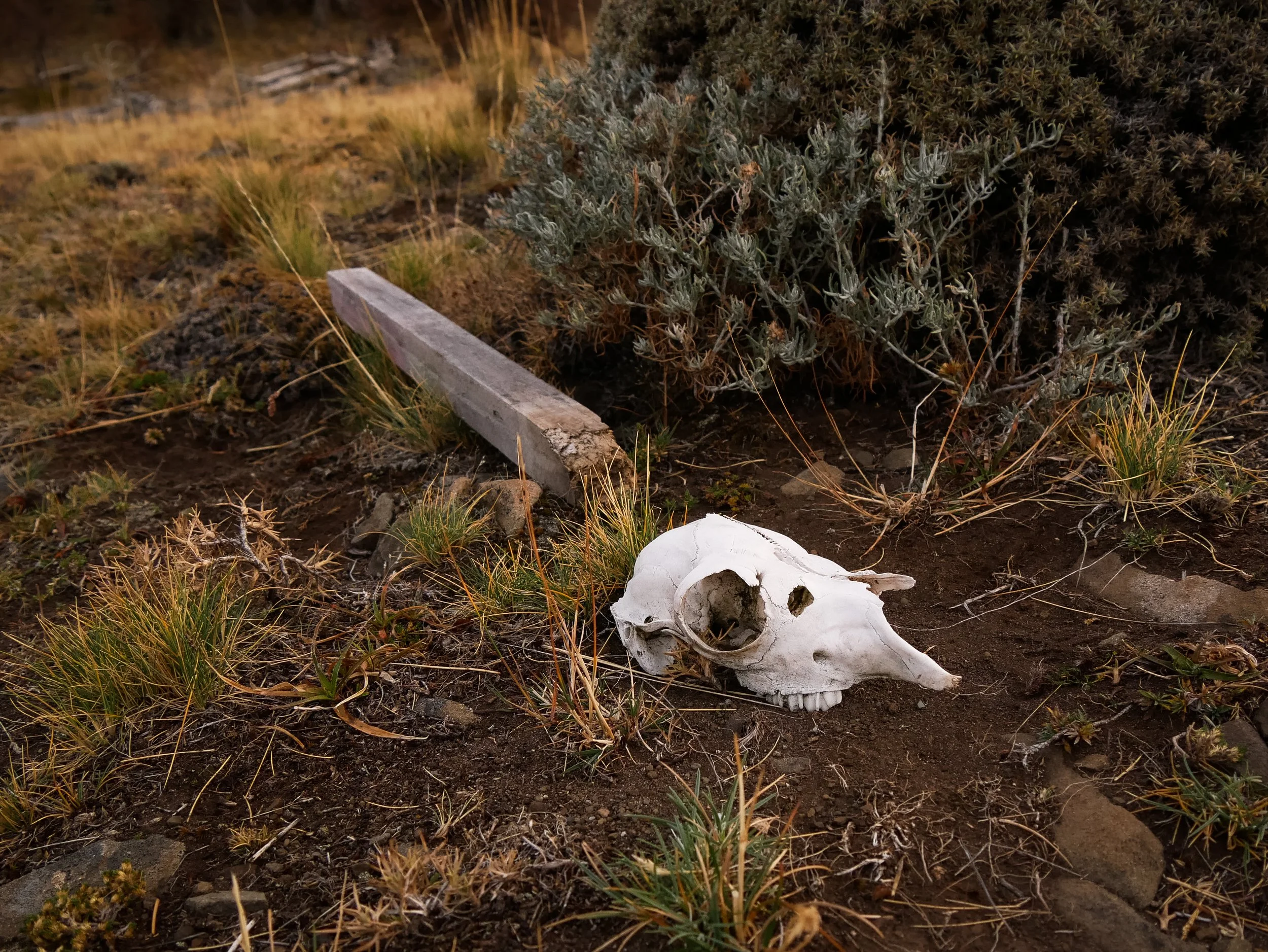
With most puma populations and their habitats declining throughout the Americas, in Chilean Patagonia where they are protected, numbers have managed to increase. It’s estimated their density is twice that of any other known populations. At Panthera, one of their goals is to promote human and animal coexistence. Today, many of the estancias bordering on Torres del Paine are helping protect the puma, utilizing trackers to help spot them rather than shoot them. UC Davis and Rewilding Chile have been monitoring and tracking puma for years, to help preserve, restore and protect the natural habit of many of Chile’s native species, including the puma. Today they number anywhere between 50 and 200 specimens within the national park. The cat that was nearly erased is now making a comeback, thanks to a major shift in perception and conservation in Patagonia.
On my first day in the national park, I spotted a cat high up on a distant hill too far for good observation. But on my last day, we turn a blind corner near the border of the park and there ahead of us are nearly a dozen vehicles parked along the side of the road. This many people can only mean one thing – puma. Tracking these big cats has become big business in Patagonia. Estancias on the park border that used to kill to protect their sheep now utilize Great Pyrenees and Maremma dogs embedded in the herd to guard against predators. These large, powerful dogs are well suited with thick coats and look almost like ironic cousins with their white, fluffy fur. Today the hunt was to shoot with cameras.
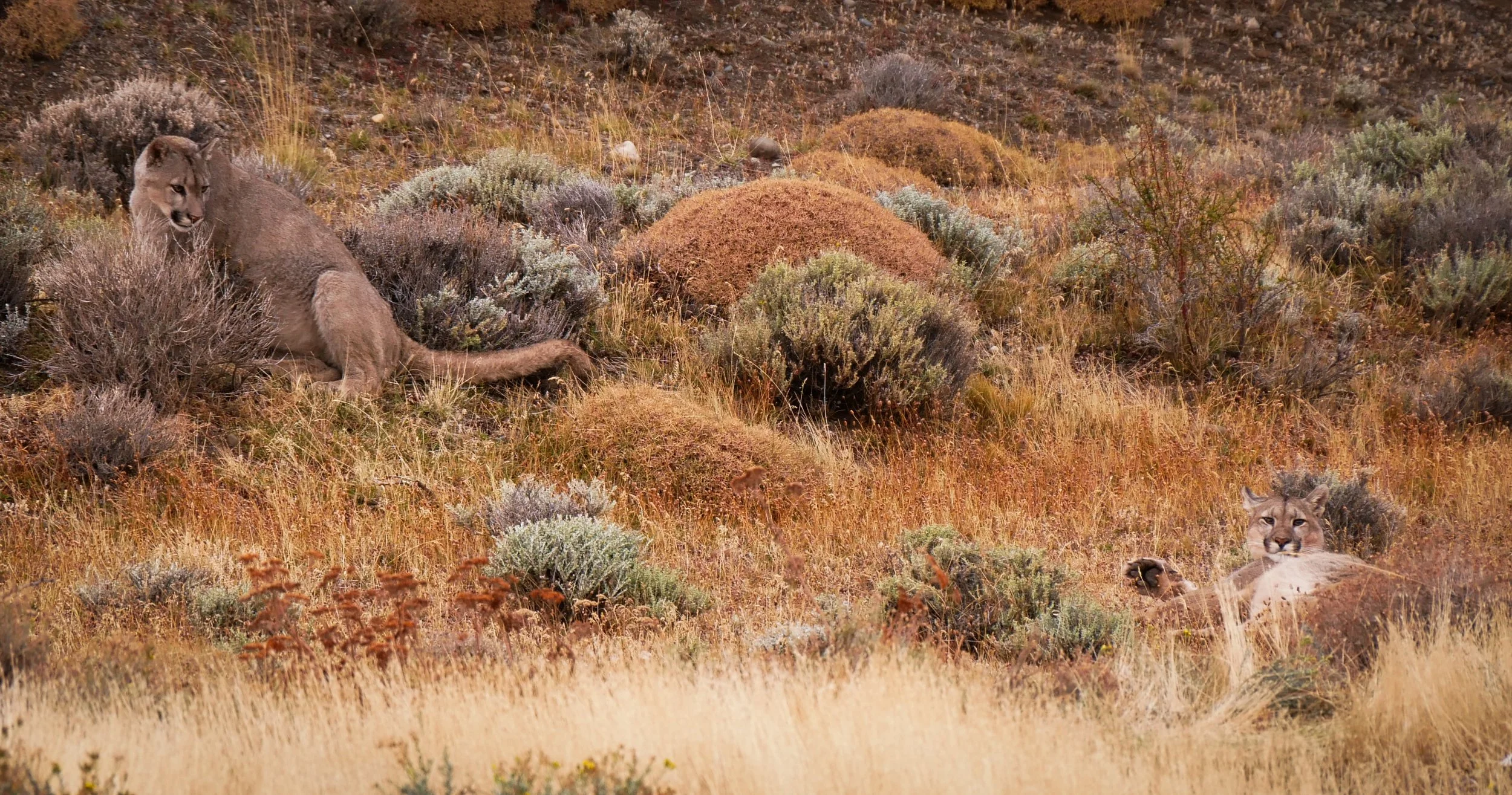
We immediately pull over and survey the situation. Paying ecotourists with expensive cameras and long lenses are guaranteed money-back sightings. I’m just a visitor passing through on a public road with limited rights near private land. We give those already here priority, with silent knowing nods from our guides to the estancia guides. Most know each other and respect the hierarchy in play.
With the highest concentration of these cats anywhere, they’ve become quite habituated and comfortable with human contact, knowing they’re protected in the national park. Scanning, I spot various puma trackers up in the hills. Most don’t carry guns, relying on their knowledge of puma behaviour for guidance and for protection. Suddenly in front of us I spot an adult male lounging a short distance up the hill, a female lying hidden further down. There’s a lot of commotion in a nearby bush and someone whispers it’s the cubs feeding. The adult female is cleaning herself after eating, the male eventually moves down closer.
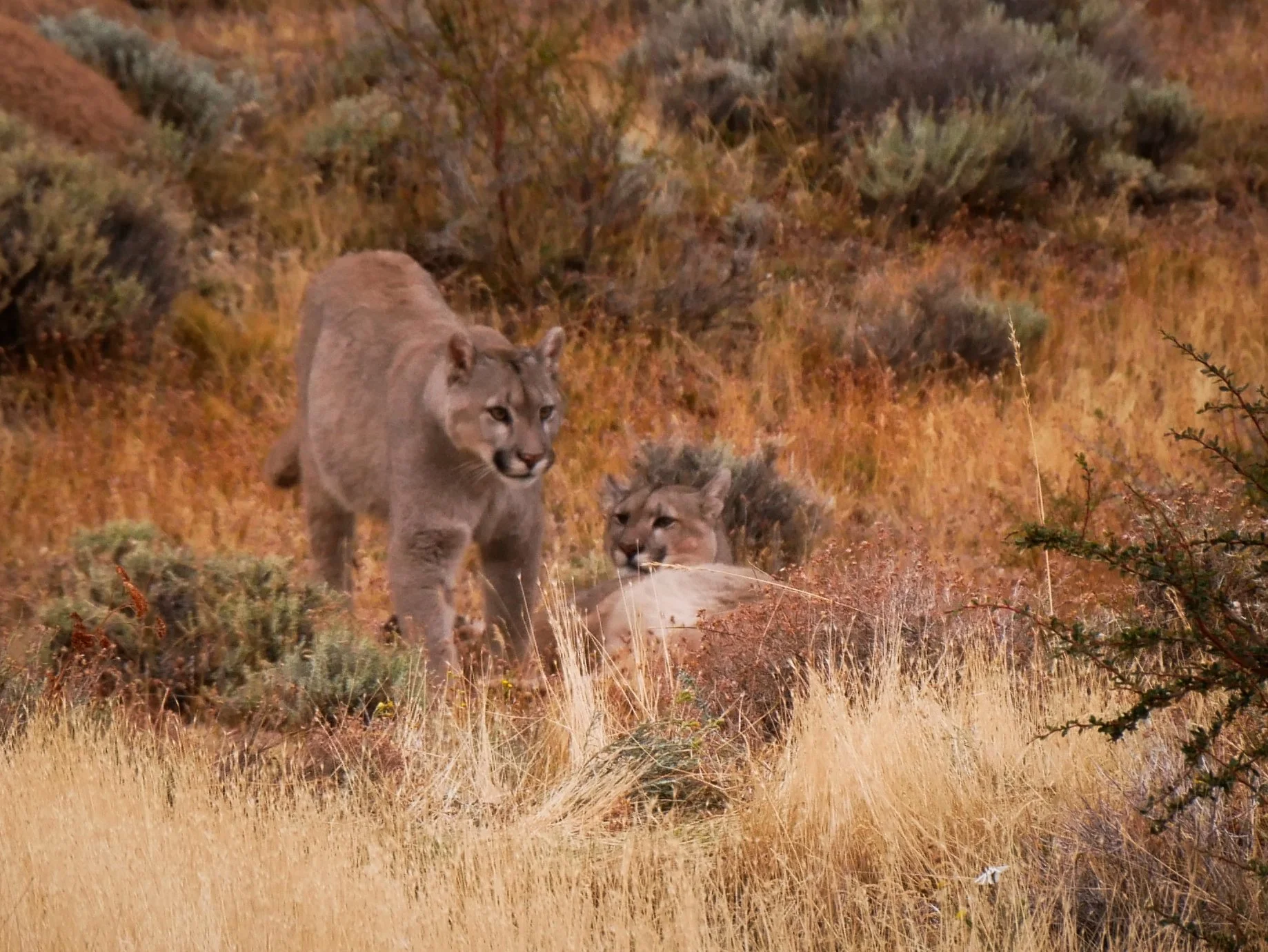
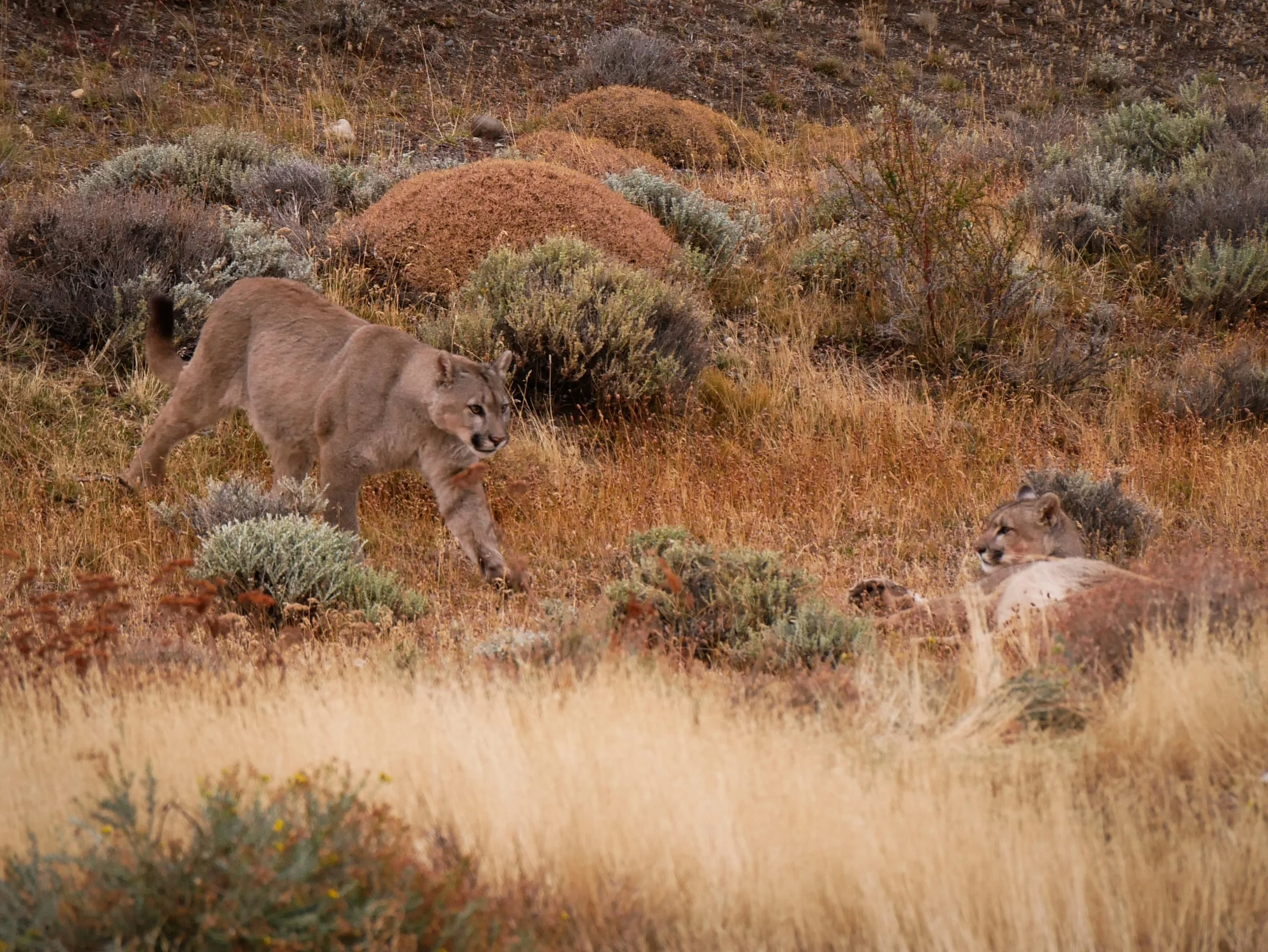
Mark Elbroch in a UC Davis study a few years back found that these carnivores are not as solitary as originally thought and that food sharing amongst puma is becoming a more social activity, potentially more so being protected in Torres del Paine and with a greater food supply.
“For decades, mountain lions were thought to be solitary hunters, their lives defined by territorial defense and competition. But new research in Wyoming and Patagonia is overturning that old story, revealing a hidden social world of generosity, cooperation, and enduring family ties. In Wyoming’s rugged mountains, biologists have documented mothers adopting orphaned kittens from other females, adults sharing their hard-won kills with neighbors in acts of reciprocity, and even seasoned cougars provisioning dispersing youngsters with food to ease their passage into independence. Far to the south in Patagonia, long-term studies have captured intimate moments between mothers and their now-grown offspring—reunions that suggest deep and lasting social bonds. Together, these discoveries paint an entirely new portrait of the puma: not the solitary ghost of the mountains, but a creature capable of empathy, cooperation, and complex social relationships still being uncovered.”
Later that day I’d heard an adult male had killed a male cub in this group, presumably to reduce breeding competition - the balance of nature. Butch Cassidy’s ghosts had caught up with me as life and death played out before us on the steppe.
With the snowline and temperatures dropping, EcoCamp wanted to shut down the section I was staying in for the season and I was happily upgraded to a suite dome. With the frosty mornings, I’d wake to embers in the wood stove and throw another aromatic (and certified sustainable!) log on the grate, crawl back into bed and let the room slowly warm. It was a glorious way to finish my stay and adventure in Patagonia.
On my way to the airport, I had to stop in Cerro Castillo to pick up some merkén, the traditional indigenous Mapuche spice that I’d come to crave. This amazing smoky chili powder was voted best spice in the world in 2024 by one organization. I blame Rodrigo, one of the guides at EcoCamp for my addiction.
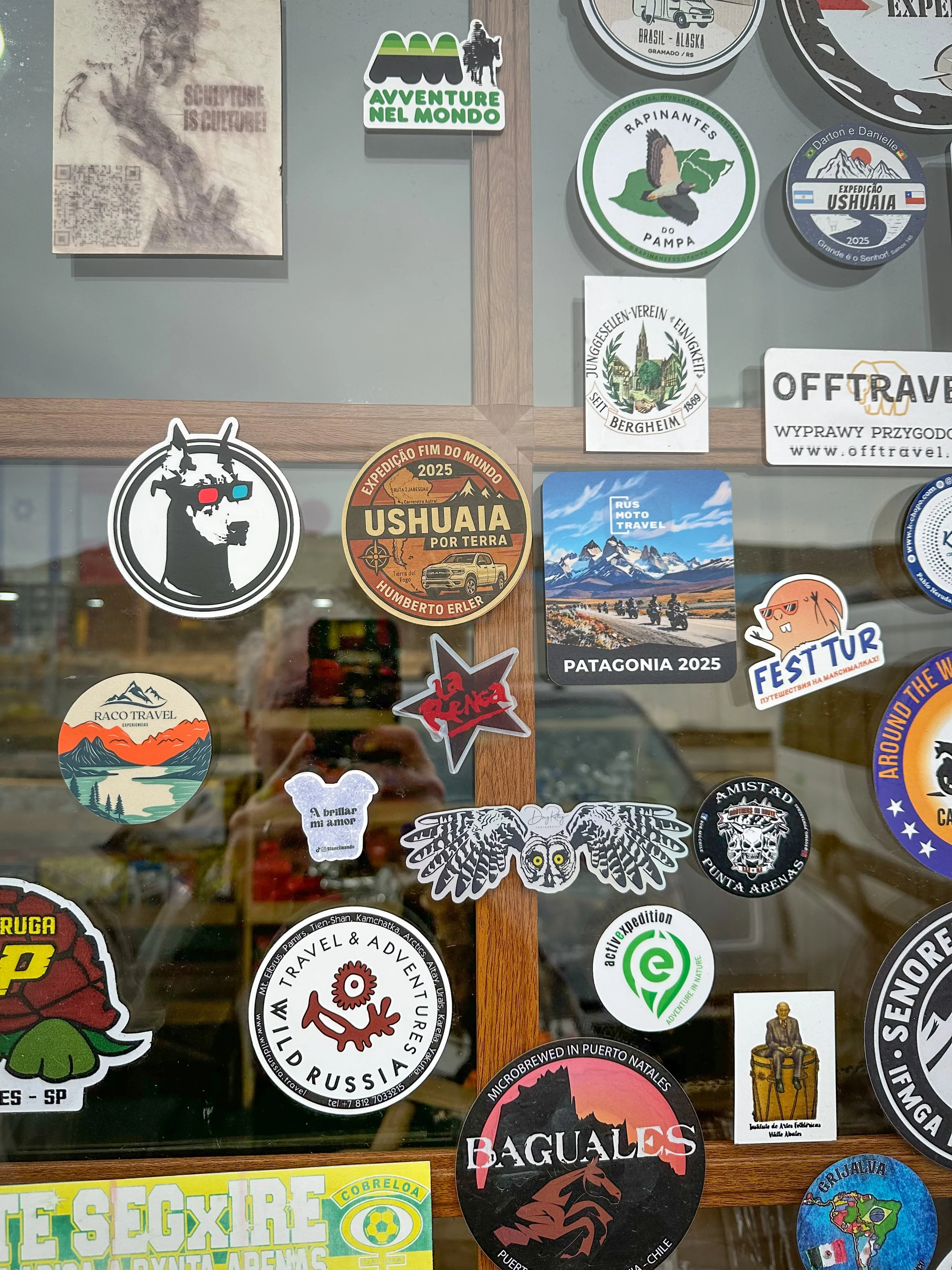
With hundreds of stickers already in place, I had to slap a sticker on these same store windows in Cerro Castillo at the Argentine crossroads Ewan McGregor and Charley Boorman passed by in the TV series Long Way Up. A little something for posterity to leave my mark and reminder that I’d been to Patagonia and Fin del Mundo.
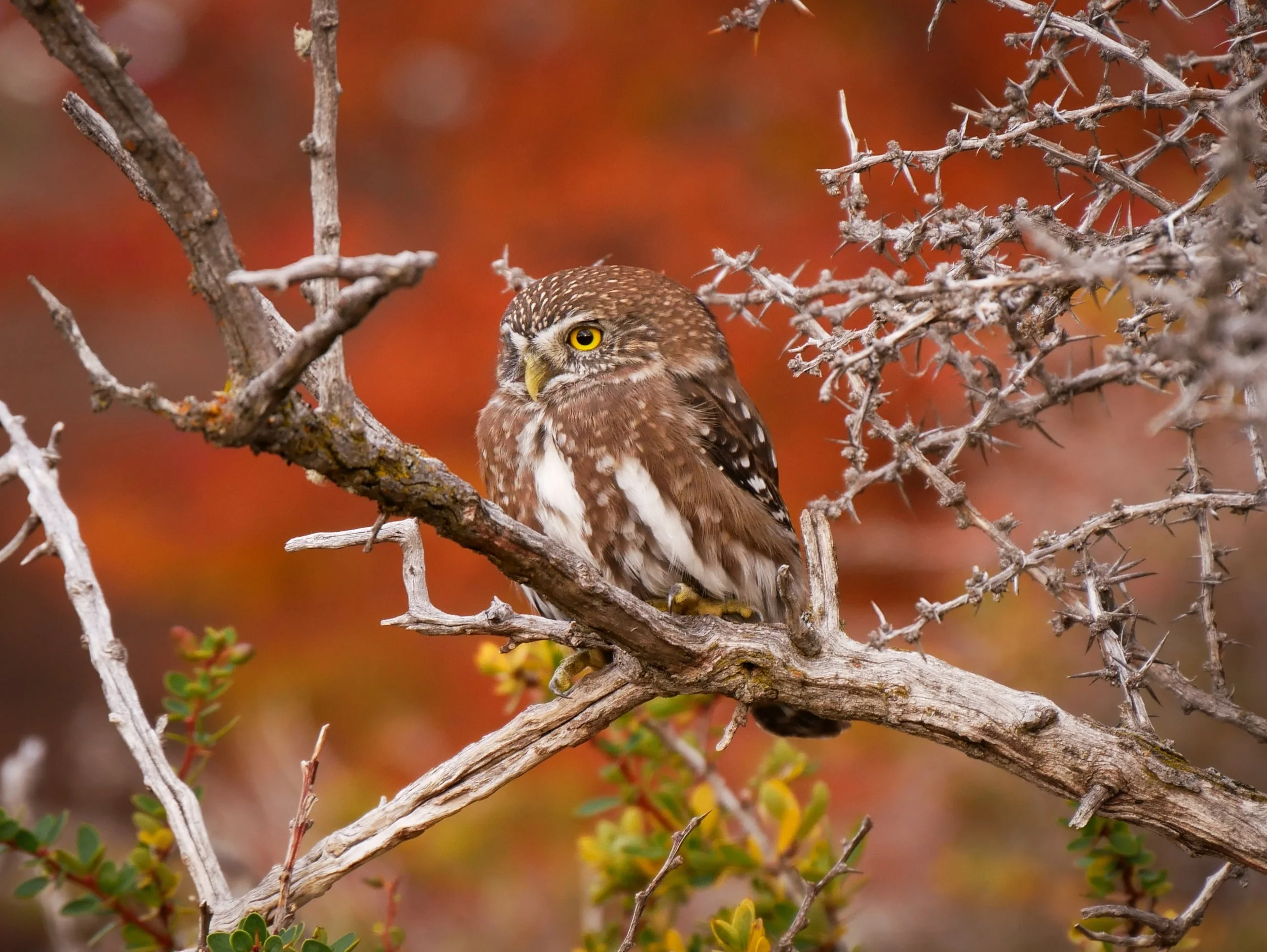
Calafate berries found only in Patagonia have short, spikey stems to protect the fruit. After picking these berries along the trails, local Tehuelche and Aonikenk legend has it anyone who eats them will return to the region. I certainly hope that’s the case!
At the time of writing this story, tragically 5 hikers had died in a terrible blizzard in Torres del Paine on November 17, 2025 amidst category 3 hurricane winds of 120 mph. Late Spring, approximately 30 people set out that day with nine people having gone missing in the John Garner Pass, a section of the Paine Massif Circuit also known as the 'O Circuit'. Eventually 4 were rescued, but with extremely high winds and whiteout snow conditions, the other 5 did not survive.
As beautiful and mesmerizing these areas are, we are reminded how tenuous and changeable conditions can be in these remote wilderness landscapes. And how we cannot take our safety or life for granted when exploring the parts unknown.